
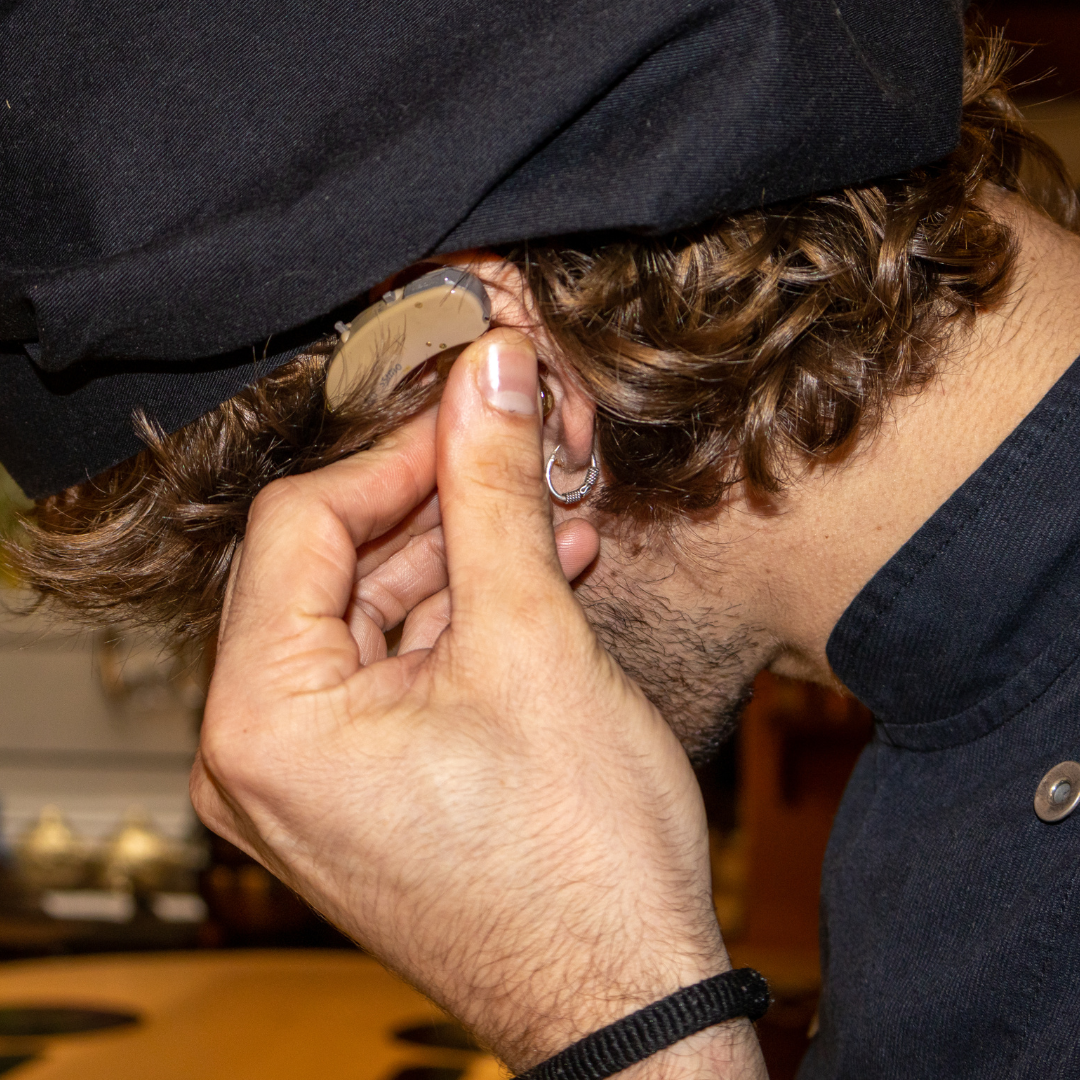
Tracking speech in busy dining venues can feel exhausting when environmental noise drowns out your hearing. Our practice provides targeted diagnostics to evaluate hearing in quiet atmospheres as well as complex noise environments. After uncovering the precise factors driving your difficult hearing, our team helps you select individualized auditory solutions.
Explaining Normal Quiet Hearing Versus Restaurant Listening Fatigue
A quiet setting creates an optimal signal-to-noise ratio, ensuring the conversational partner’s voice rises cleanly above ambient sounds. Modern restaurant environments create the complete opposite listening environment. Multiple voices, music, kitchen noise, and reverberation overlap with speech, forcing the ears and brain to work harder to separate the person you want to hear.
This symptom pattern often reflects underlying high-frequency hearing loss, central processing dysfunction, or physiological aging of the auditory nerve. Factors including listening fatigue, poor dining lighting, acoustic distance, and wandering attention make comprehension significantly harder. Many individuals register normal audiometric thresholds on standard pure-tone screenings yet show profound deficits during speech-in-noise testing. Difficulty in restaurants deserves evaluation even when everyday hearing seems normal.
Diagnosing High-Frequency Hearing Loss and Clarity Issues
We begin by reviewing your history of communication difficulties, prior noise exposures, ringing or tinnitus, pharmaceuticals, and unilateral symptoms.
Pure-tone audiometric evaluations measure the absolute quietest sounds audible across specific octave frequencies using air and bone conduction. Patients with high-frequency hearing loss typically exhibit a sloping audiogram configuration where sensitivity steadily declines at elevated pitches. Diagnostic evaluations may also integrate acoustic tympanometry to check middle-ear pressure alongside word-recognition testing to evaluate speech processing.
Standard quiet test booths fail to simulate real-world restaurant noise, making speech-in-noise testing a crucial clinical tool. It measures how well you recognize words or sentences as competing sounds become louder. Together, these results show whether the problem involves audibility, speech clarity, background-noise processing, or a combination of factors.
Understanding Auditory Processing Disorders in Noisy Environments
A central auditory processing disorder disrupts the neurological transmission and cognitive interpretation of sound waves. The ears may detect tones at expected levels, but the brain may have difficulty organizing competing signals, distinguishing similar speech sounds, or following rapid conversation. We systematically verify peripheral hearing health before establishing whether an advanced auditory-processing evaluation or medical referral serves your needs.
Actionable Listening Tips for Noisy Social Settings
Strategic behavioral modifications can substantially improve the auditory signal reaching your ears while maximizing supportive visual cues. Before leaving home, identify quieter dining venues or plan to eat during less crowded service times. Dining locations utilizing sound-absorbing elements like booths, felt panels, window curtains, and carpet offer better acoustics than high-ceilinged rooms with hard surfaces.
When arriving at the dining venue:
- Reserve a table located well away from kitchen doors, active bar counters, overhead speakers, and banquet groups.
- Situate yourself with a structural wall behind you to minimize distracting ambient noise from behind.
- Position yourself directly opposite your companions where direct lighting highlights their facial expressions.
- Minimize the physical gap separating you and the person speaking as much as reasonably possible.
- Place your better-hearing ear toward the person you most want to hear.
- Ask speakers to reword the specific phrase you missed rather than repeating their initial wording.
- Verifiably confirm essential conversational facts instead of bluffing comprehension.
- Allow yourself a short listening respite when auditory concentration starts to feel drained.
- Ask companions to speak clearly at a natural pace.
- Yelling distorts natural speech formants and rarely makes spoken words easier to decipher.
What Are the Best Tools for Hearing with Background Noise?
Appropriate hearing technology is dictated by the precise diagnosis, primary listening environments, and the degree of diagnosed hearing loss. Advanced hearing aids utilize beamforming directional microphones, adaptive noise reduction, and specialized restaurant programs to elevate voices directly ahead while suppressing ambient chatter. Users should establish realistic expectations because no hearing device can fully eradicate all unwanted ambient speech.
Incorporating a dedicated remote microphone provides an even more pronounced improvement in signal-to-noise ratio. Worn on the speaker’s collar or set on the table, the microphone broadcasts direct audio to paired hearing aids or specialized receivers. This reduces the effects of distance and surrounding noise.
Additional effective assistive technologies include:
- Table microphones for small-group conversations
- Integrated telecoil programs for tapping into venue-wide induction loop systems
- Smartphone speech-to-text or live-captioning applications
- Modern wireless hearables delivering directional beamforming and sound enhancement
- Sound-level meter applications and community-driven quiet dining guides
We evaluate these technological options, ensure full hardware compatibility, and instruct you on maximizing your selected system.
The Clinical Role of Audiologists in Managing Loud Environments
A thorough audiological evaluation expands the diagnostic scope well past simple quiet listening performance. We examine the challenging acoustic venues, conversational setups, and noise profiles you encounter to select appropriate diagnostic tests. Your comprehensive workup may involve pure-tone hearing thresholds, middle-ear testing, recorded word recognition, and speech-in-noise measures. Dedicated central auditory-processing testing will be scheduled if your history and primary diagnostic testing indicate central pathway issues.
Abrupt auditory reductions, unilateral hearing shifts, or rapid functional deterioration require prompt assessment by an ear, nose, and throat physician. Comprehensive clinical care targets the physiological roots of hearing difficulties rather than simply writing them off as bad restaurant acoustics.
Arrange a Hearing Evaluation With Us Now
When dining out causes you to guess at words, detach from family, or experience severe listening exhaustion, book a comprehensive hearing evaluation with us. Our specialists can introduce effective interventions to support your hearing in noisy environments via precision hearing aid fittings, assistive devices, or audiological rehabilitation.
Connect with us today to arrange your clinical visit and take the first step toward clearer, easier dining communication.